
I will cover the basics of charging here. There is a lot of information around and there is of course your manual, the information here is designed to just cover off the basics. It is not designed to cover every case and provide perfect information – it is a basic primer.
Charging speeds
I’ll use my Zeekr 7X AWD as an example, your model may be slightly different but I’m sure you’ll be able to ‘translate’. My car has a 100 kWh battery, we need that for some calculations later.
My car can charge
- From a power point at about 2.4 kW
- From an AC charger at up to 22 kW
- From a DC charger – these vary a lot, lots are around 50kW and chargers are getting faster and faster. Some in Australia are now up to 400 kW and at least one Zeekr owner has managed close to that figure.
I’ll explain more later but the numbers are important – trust me the maths is simple. If you are using the 11 kW charger to fill my 100 kWh battery from completely empty to completely full will take 100/11 = 9 hours. The power point will take 100/2.4 = 42 hours. You can see that the super fast DC charger will ‘fill your tank’ in no time at all.
Some people will say – there are losses and the charging slows as it gets closer to full – that is 100% right but these figures give you the right order of magnitude.
It means you can see how some people are happy with 2.4kW charging – if you used say 25% of a tank a day then you’d only need say 10 hours each night of charging. May well be fine for you.
Just some more to think about – these cables that charge your car are electrical cables, so don’t try and fold them in half, drop them in water or do dumb things. They are fairly robust but are electrical cables.
The speed you achieve is limited by various factors
- The quality of the circuit behind your domestic power point. The ‘granny charger’ that came with my car can reduce the speed below 2.4kW. I’d only do this if you keep tripping the power.
- The super fast DC chargers are very variable. The Zeekr is one of the most fastest charging cars – if the system delivers it. My experience is that the chargers that are marked as 50kW, generally deliver a solid 50kW. The ones that suggest much higher speeds are more likely to have issues, I often find they don’t charge at their full speed. The speed delivered can depend on the local electricity supply, whether another car is charging at the same time, or simply issues with the machine.
Other big ‘charging speed’ factors
- We are all worried about the life of our battery. The car has some a very sophisticated system managing that battery. One big thing it does is to slow the charging as it gets closer to 100%. So you may see it screaming along at 200+kW when the battery is 50% full but it slows right down when your battery is 75-80% full.
- Weather – cold batteries charge slower. This is a complex issue and some EVs have battery pre-conditioning to heat the battery before you start charging…v tricky stuff because you don’t want to use too much battery heating the battery so that you can recharge the battery faster. Just be aware cold batteries charge slower.
Plugs
People often ask about what plugs into what chargers. It is very easy (in Australia), the plug in almost every car works in pretty much every charger.
OK there are some small exceptions – Nissan Leaf and Lexus cars have a different (Japanese standard) plug called chademo.
Really the only time that this becomes an issue is that many chargers have two ‘hoses’ attached to the one charger. One is the ‘normal’ one that works with your Zeekr and the other is a chademo one. So the trap for new players is that you pull and see someone charging and a spare hose…the spare is often an unusable (for you) chademo one.
I also had an experience on Kangaroo Island where they were very early installers of EV chargers – they had some really weird cable that I could not use….the only time it has happened to me.
Tesla chargers
OK so your Zeekr can connect to a Tesla charger – I thought that was not possible. Ahh – let me try and explain
Tesla rolled out their network of Tesla Superchargers around the country and have made them Tesla only. A clever strategic decision. These are super fast and super reliable.
Tesla also strongly encouraged (paid for or subsidised) places like motels to install what are often called Tesla Destination chargers. There are different versions of these, some call them V1, V2, V3 type thing. They have subtle differences in appearances and may have signs saying “Tesla Only”.
Some work and some don’t. The plug will always fit but some are software locked to Tesla only. Often the owner will not even know. We’ve stayed at hotels that tell us it will not work – and it did. We’ve stayed a places that say it will work – and it did not.
My rule is – ask if they are happy for you to try. In most cases you simply plug in and you’ll know in 30 seconds, charging starts or not.
There are also some apps (I’ll tell you more on this later) that can help tell you which ones work and which ones don’t.
OK, lets get back to those Superchargers. In Europe, Tesla has been strongly encouraged to allow non-Tesla drivers to use them and this happening. In Australia it has started and so some are available for you and your Zeekr. Not unreasonably the first ones that Tesla had made available are the low use ones. Tesla will charge you and so they get some more income – all very fair.
The bad news is that despite the ‘advertised’ charging speed, you will most likely only get around 80kW. Still plenty if you need a charge.
As more and more EV chargers are being installed under government grants, the more aware state governments are insisting that they are available to all.
Costs
This one is tricky and actual rates are changing all the time, let me try and explain.
I am lucky at home, I have an 11kW charger and I have off peak power. So most of the time it costs me 17c/kWh. Back to our simple maths – if I had to completely ‘fill’ my 100 kW car then it would cost me 100 * $0.17 = $17
The ‘granny charger’ / charging through your power point will be the same rate – but will take longer.
If you have solar power at home and you can divert your excess power to your car then you’re even better off.
Now the tricky bits – out in the public spaces, rates vary a lot but typically the faster the charger the higher the rate.
Let me cover off those free ones you see in Shopping Centres and the like – yes they really are sometimes free. BUT don’t get too excited, they are usually the same 11kW ones like I have at home…..so if you use one, it will take you 9 hours to fill (from empty to full) and save you $17. So I use my rough rule, I get about $2 per hour of charging. All good and if you were there anyway or needed a zap then all good – but it is small dollars you’re getting.
Rates for highway type chargers are much higher – but MUCH quicker. These are sometimes called DC chargers. Let me give you a few examples of costs
- Chargefox
- 50kW chargers are about $0.45 per kWh
- 350kW chargers are about $0.67 per kWh
- Evie
- 22kW chargers: 50c per kWh.
- 50kW fast chargers: 58c per kWh.
- 150kW super-fast chargers: 68c per kWh.
- 350kW ultra-fast chargers: 73c per kWh.
- Ampcharge
- 180kW chargers are about $0.69 per kWh
- BP Pulse
- 75kW chargers are about $0.55 per kWh
It is all buyer beware type stuff – I have been caught connecting to a 350kW charger and paying $0.67 rate but only getting the slower speed of 50kW. I could have plugged into a 50kW charger and paid a lower rate. Early adopter stuff!!
Apps
A number of EV owners have said to me, “It’s like a new phone or PC, there is so much to learn. So many settings to try.” I agree and you will soon discover that you need a variety of apps for your phone. Let me stress that I am a tech head and love all the apps – but you don’t have to get them, the car will run fine without them.
Various charging apps
You may think that you can pull up and charge your car and tap your credit card – that MAY be possible but unlikely. If you are going to be using public chargers, it is MUCH easier to download some of these apps. You’ll need to create an account and enter payment details (eg credit card or the like).
If you are like me and expect to do a lot of country driving then I also arranged for a card from each of these companies. They are very useful if the your phone has no mobile connection when you want to charge. That can happen in deep shopping centre car parks, remote areas of oz or anywhere all if the phone network dies. The main ones I have used are below
- Chargefox
- Evie
- BP Pulse
- AmpCharge
Evie now allows you to tell them to remember your car. If you do this (and have a saved credit card) then you can simply plug the car in and it starts charging
Plugshare
This is a fabulous app that lists all (well nearly all) the chargers in oz and beyond. The best part is the fact that real users keep it accurate. When you charge your car, you can enter some quick details – like your contact info, your car type and how long you expect to be charging. Also importantly if you had any issues.
This is where you can check those pesky Tesla chargers and also reliability of any charger. On road trips, my diligent wife looks at the chargers we have planned for stops and checks – has a non-Tesla user charged there ? If yes then it is possible. Step 2 is – has someone used it very recently? If yes then there is a good chance it is still working
ABRP
I think that this is the best route planning app. NOT necessary at all for driving around town but very handy when doing trips like I’ve done going Melbourne to Adelaide to Sydney through the back blocks.
What do I do??
The information below is for my other EV, a Kia EV6 that I have had for 3 years.
For my use, charging is a non-event. I live in Melbourne and only do around 300km a week, my car does easily 500+ km on a full charge but I typically only charge to 80% unless I have a trip planned. I am not certain about this but charging to 80% is easy for me on a typical week to week basis.
My routine is easy – one night a week I plug in and leave the car overnight. It kicks off at 11pm to get those cheaper rates. When I get to the car – it is 80%. Easy, super simple. I tend to do it on a Saturday night because it suits me.
Road trips are a bit different.
- A critical piece of knowledge here – your range is much less with highway driving. I get easily 500+ km round town but can be as low as 400km on fast hilly trips, in cold weather with head winds!!
- I charge to 100% the night before we leave
- I use ABRP to plan the trip, really to give me some ideas. It takes into account all sorts of things
- We tend to stop every 2.5 – 3 hours because we’re getting old and need food and toilet breaks.
- We plug in the car, we note that in Plugshare and head inside. By the time we are finished inside, the car is usually ready
We’ve had very few issues but don’t tend to travel at peak times like Xmas Eve, Good Friday.
We have done 60 000 km over 3 years with a number of big road trips. Things to note
- Chargers that we select have seldom been broken – we look ahead and check (See Plugshare above)
- Chargers are often not as fast as advertised
- We have had an occasional issue where we have had to quit the app, unplug the car, wait 30 seconds and start all over again. I think that sometimes the plug where it goes into the car ‘droops’ a bit and fails to make a perfect connection.
Final tip
When using public chargers my routine is
- Turn the car off – sounds silly but easy in the early days to get out and leave it running
- Plug cable into the car
- Start the app while holding the cable so it doesn’t droop
- Once all is whirring and clicking, let cable go.
- Check dash to see how long to reach desired charge.
- Enter info into Plugshare
- Lock car
I listed stuff out because I have managed to get into a mild panic – car not charging and cable won’t come out.
Remember there are two easy ways to get cable out of your car, so you can drive off.
- Simply unlock your car – once you do this, the cable can be pulled out. You need to be quickish
- If all else fails, stop the car charging. Inside the boot behind where the plug goes into the car, is an emergency release. I understand it may cause issues if you pull this while the car is charging – not sure

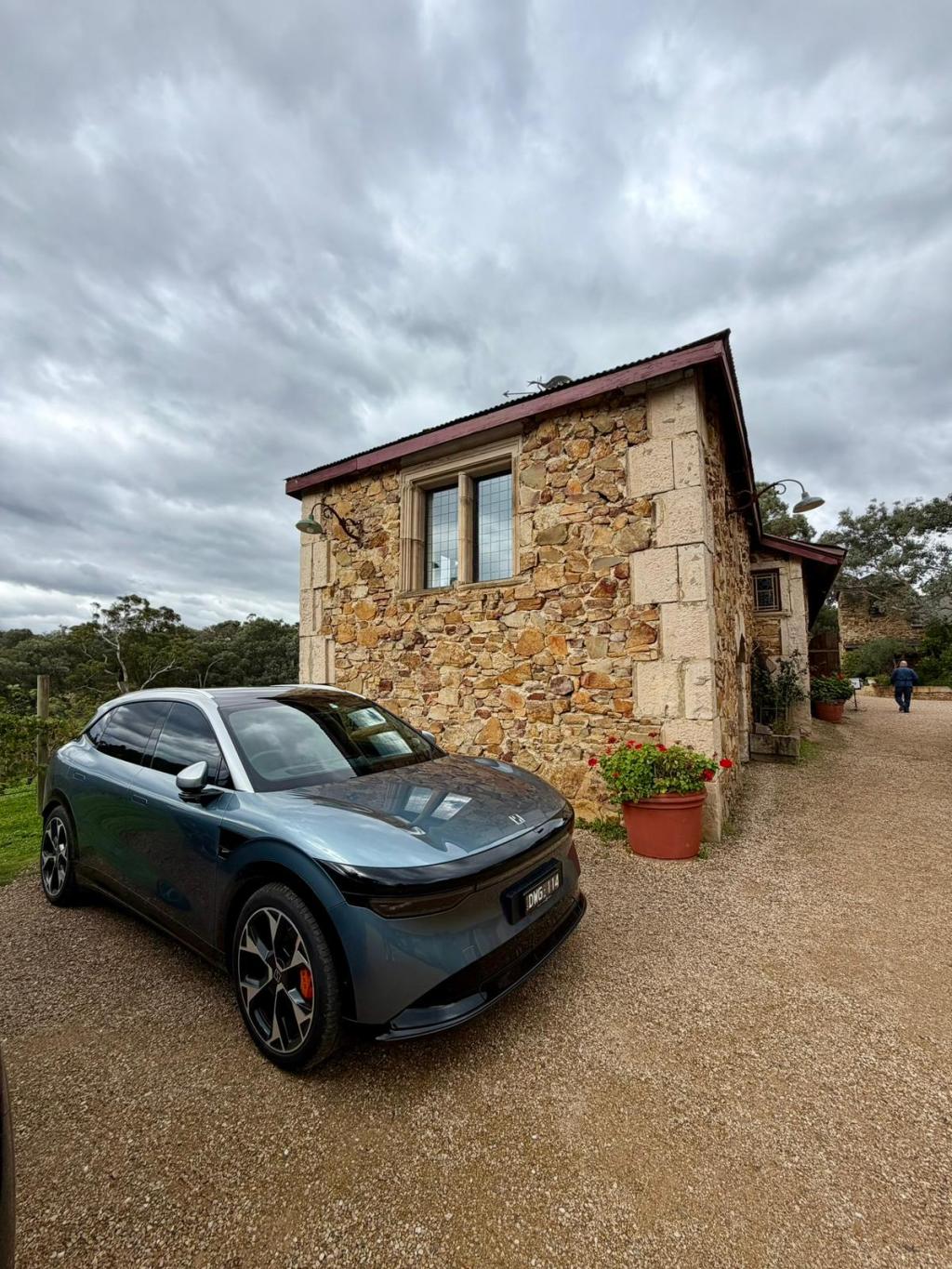
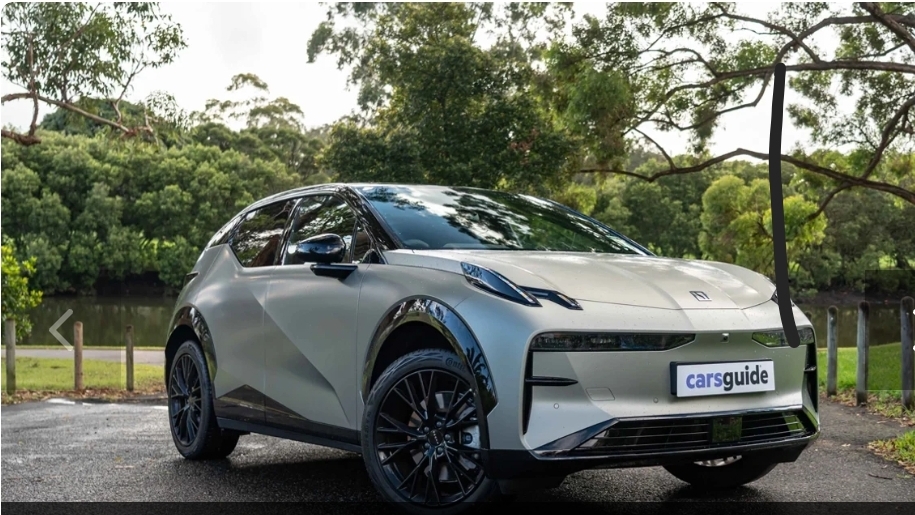
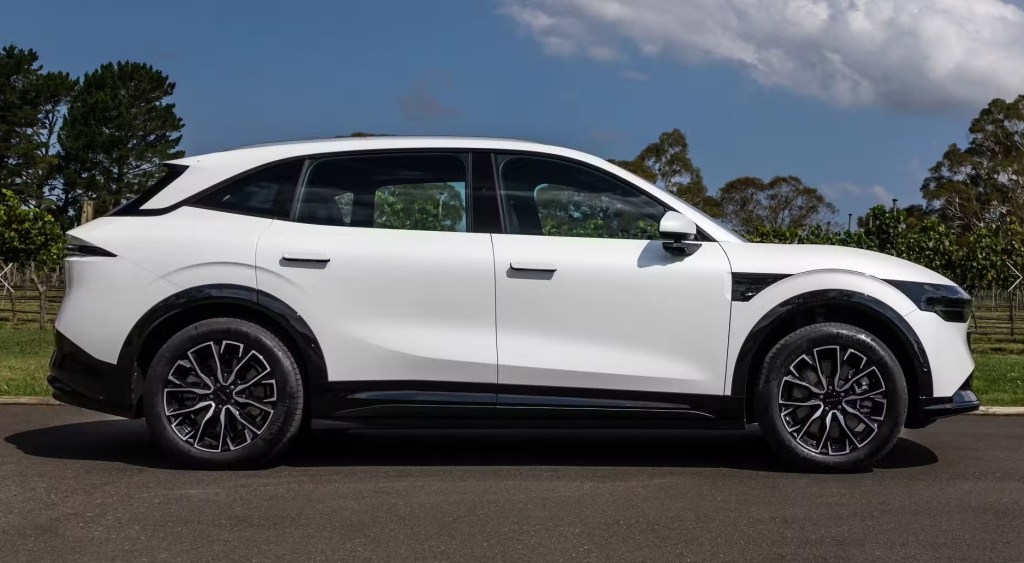
 My Zeekr 7X
Leave a comment